
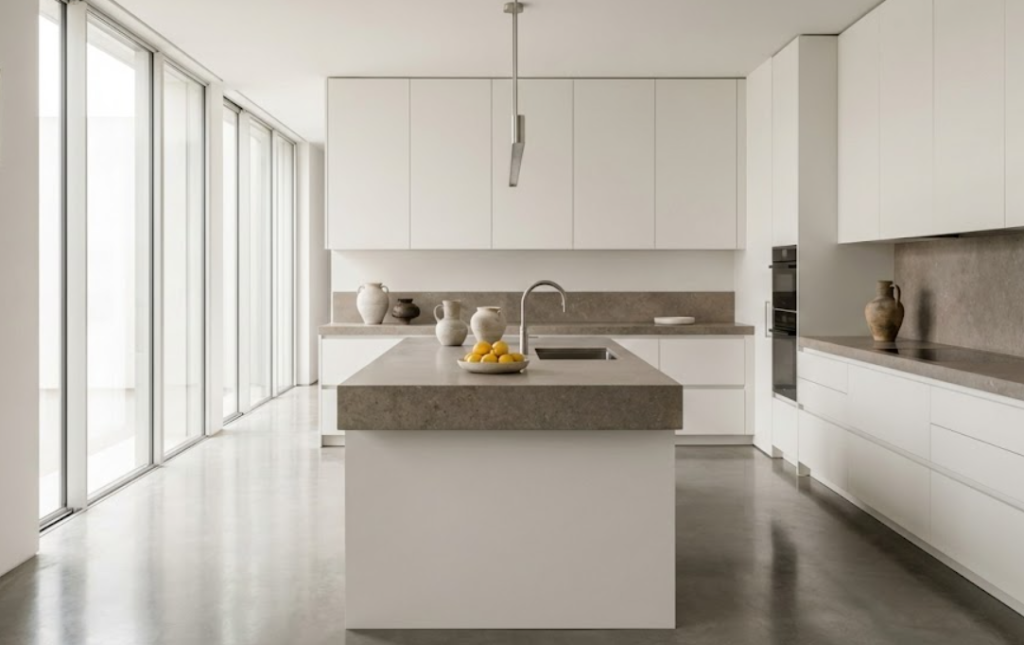
Some businesses try to look premium by raising price, polishing the showroom, and speaking in big words.
Others communicate something different without raising their voice: calm.
That’s what I mean by silent luxury: premium that doesn’t need to be explained, because you feel it across the whole experience—not in one isolated detail.
## What silent luxury is (and why it’s bigger than aesthetics)
Silent luxury isn’t “minimalism” or “less stuff”. It’s a specific feeling:
-
- nothing clashes
-
- nothing pushes
-
- nothing contradicts itself
-
- everything feels inevitable
In high-value projects, that feeling doesn’t come from taste. It comes from a system: clear decisions, consistent criteria, and operations that don’t improvise.
Without that system, companies compensate with “effect”. And effect collapses the moment the client asks two concrete questions in a row.
## The core misunderstanding: thinking luxury is what’s visible
Many brands confuse luxury with:
-
- expensive materials
-
- high-end appliances
-
- dramatic lighting
-
- flawless renders
-
- words like “exclusive” and “craft”
Those can be present, but they aren’t the essence.
Silent luxury is invisible:
-
- real tolerances (what you don’t notice is what’s solved)
-
- clean sequencing (no favors required to move forward)
-
- governed change (adapt without breaking promise or margin)
-
- aftercare without drama (the business acts like a system)
Premium clients can forgive a contained imperfection. They don’t forgive noise.
## Silent luxury is a low-friction experience
I look at it as the sum of micro-moments.

If in those moments you introduce:
-
- contradiction
-
- urgency theater
-
- improvisation
-
- “we’ll see”
the premium feeling cracks.
And once it cracks, two things happen:
1) conversion drops without price being the official reason
2) margin erodes because the business tries to “buy trust” with discounts or concessions
## Signals that don’t depend on budget
### Coherence of criteria
Before showing options, you can feel a decision logic. Not “you choose”. More like “this is why this makes sense”.
### Precision without ostentation
No theatrical urgency. Just precision: what gets validated, what gets frozen, what can change and what cannot.
### Traceability
Not “papers”. Traceability:
-
- clear agreements
-
- explicit assumptions
-
- recorded decisions
-
- the same story repeated by the whole team
### Operational silence
No fire-drill calls. Status updates with meaning.
Calm is designed.
## When luxury isn’t silent, it often signals insecurity
Noisy premium gives itself away through excess:
-
- too many promises
-
- too many superlatives
-
- too many options
-
- too much explaining
If a business needs to convince you it’s premium, it usually means the system doesn’t carry it.
In silent luxury, the speech shrinks. Evidence grows.
## The separator between “nice” and “premium”: joinery
In kitchens, clients may not name it, but they feel it.

Joinery is where reality reveals itself:
-
- alignment
-
- gaps and shadows
-
- touch
-
- continuity
-
- installation precision
Silent luxury lives there.
And here’s the uncomfortable truth: if operations can’t control these variables, teams compensate with marketing or speed. That always shows up at the end.
## Silent luxury is also expectation management
It’s not promising perfection. It’s making sure:
-
- the promise is realistic
-
- boundaries are communicated cleanly
-
- risks appear before the client discovers them
When clients feel informed, anxiety drops.
When anxiety drops, manual control needs drop.
When control needs drop, the project flows.
## The three places silent luxury breaks
### 1) Ungoverned commercial promises
If sales promises to close, silent luxury collapses later—production and installation will surface the noise.
### 2) Change without control
Premium buyers change. But “change” shouldn’t destroy the project.
If every change becomes a fight, it isn’t premium.
### 3) Aftercare as heroism
If resolution depends on “the good person” being available, luxury becomes theater.
Silent luxury needs clear, traceable, consistent response.
## How I detect whether your operation can carry silent luxury
I don’t start with branding. I start with operations.
These questions reveal a lot:
-
- does your team explain the process the same way, without contradictions?
-
- are decisions recorded or trapped in chats?
-
- do changes have rules, or are they permanent negotiation?
-
- are incidents traceable or do they arrive as surprises?
-
- can you update status without drama?
If the answer is “it depends”, the experience will depend too. That’s risky.

## The KPI I look at when someone says “we want to be premium”
I don’t start with average ticket.
I start with operational noise:
-
- repeated incidents
-
- manual exceptions
-
- change requests without criteria
-
- promises dependent on one person
-
- weekly “urgent” calls
If noise is high, silent luxury is incompatible—not because the product can’t be good, but because the experience will be unstable.
Premium isn’t declared. It’s sustained.
Silent luxury can’t tolerate big contradictions.
You can have a perfect render, but if the client feels uncertainty, friction, or improvisation, the story breaks.
And it usually breaks quietly, with a short sentence:
“Let me think about it.”
## Closing
If you want silent luxury, you need a system first.
In a short diagnosis, I can identify where noise is born, which signals raise perceived risk, and what part of your flow must become defendable so luxury is an experience—not just aesthetics.