
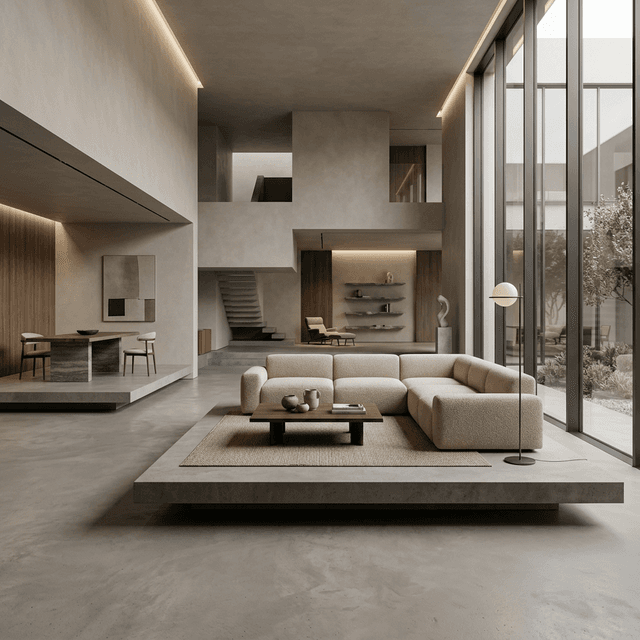
Retail Design & Neuroarchitecture
- Layouts designed for decisions, not products.
- Reduction of purchase stress through neuroscience.
- Silent Luxury environments that validate technique and emotion.
The Showroom as a Closing Engine
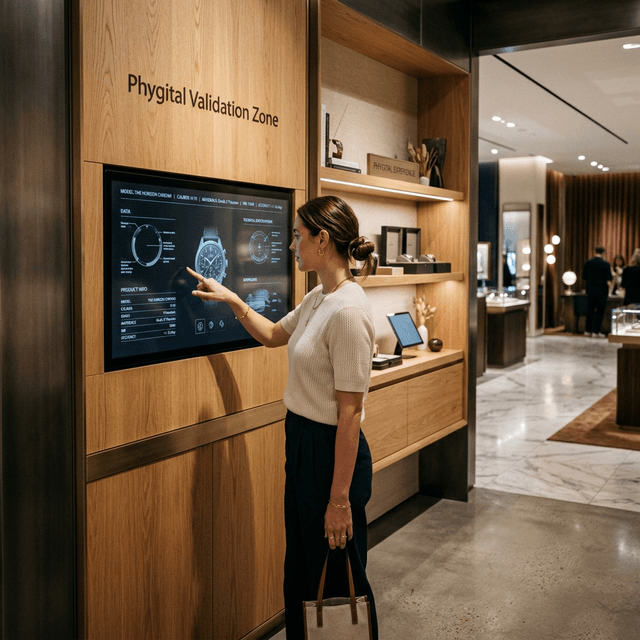
I redefine the space to serve as a validation tool for emotional and technical decisions (Silent Luxury), integrating the physical experience with the digital. The goal is not to show stock, but to eliminate the doubts that stop the sale.
Validation Zones
Specific spaces to test and feel the product without pressure.
Phygital Integration
Seamless fusion of digital technical information into the physical space.
Silent Luxury
Minimalist aesthetic that enhances real value without sensory overload.
Zero Friction
Design of flows that guide the customer toward natural purchase decisions.
Neurociencia Aplicada
Neuroarchitecture & Value Journey
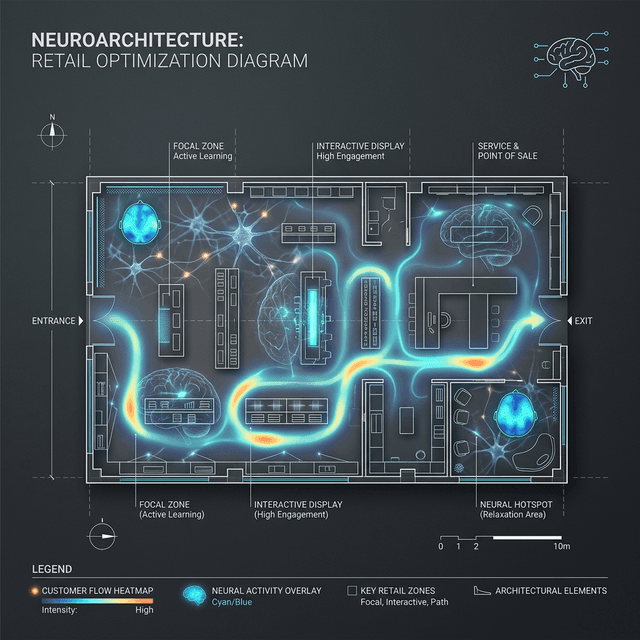
I collaborate in the layout design based on decisions, not products. I apply neuroscience principles to reduce purchase stress and increase customer confidence in every step of the journey.
Cognitive Mapping
Understanding how the brain navigates and processes the commercial space.
Uncertainty Reduction
Design of signals and touchpoints that calm the mental 'noise'.
Trust Anchoring
Use of materials, lighting, and textures that reinforce brand solidity.
Flow Optimization
Natural paths that maximize exposure without forcing the pace.
Frequently Asked Questions (Retail Design)
Q1.How does it differ from conventional retail design?
Conventional design focuses on aesthetics and sqm; neuroarchitecture focuses on the customer's brain response to facilitate decision-making.
Q2.How does this help sell more?
By reducing cortisol (stress) and increasing dopamine (satisfaction), the customer feels more secure making high-investment decisions.
Q3.Does it work for any type of product?
It's ideal for high-end (High-ticket) products where the decision process requires high technical and emotional trust.
Q4.Is it necessary to refurbish the entire store?
Not always. Often, strategic adjustments in lighting, flows, and key zones radically transform conversion.