


Continuous improvement is often sold as a “nice idea.” I care about it for a tougher reason: it’s the only sustainable antidote to heroics.
If my business works because two people see everything, fix everything, and carry everything, I don’t have a system. I have accumulated luck. Luck doesn’t scale.
## The uncomfortable truth: a company improves by how it behaves when a problem shows up
I don’t measure culture by slogans. I measure it by what happens when someone detects a problem:
-
- do we thank them or punish them?
-
- do we investigate or hide it?
-
- do we learn or hunt for blame?
-
- do we record it or let it die in a conversation?
If a problem only “exists” when it explodes, the company doesn’t learn—it only reacts.
## The real cost of not improving is repetition
Not having a continuous improvement culture doesn’t mean being “a bit less efficient.” It means doing the same thing wrong many times:
-
- normalized rework
-
- recurring decisions that never become clear rules
-
- changes executed without capturing impact
-
- and a general fatigue: people work, but the business doesn’t move forward.
After a certain size, this becomes a silent tax on margin.

## What continuous improvement culture is (and isn’t)
### It is not
posters, campaigns, annual workshops, or “values” lists.
### It is
An evidence loop repeated week after week:
1) detect friction with signals and data
2) decide with criteria (not improvisation)
3) learn with a trace (so it doesn’t depend on memory)
When that loop exists, the company improves even without “inspiration.”
## The myth that hurts most: “continuous improvement = more meetings”
Teams reject improvement when it turns into bureaucracy.
For me, the point is not more meetings. The point is less recurring friction.
If improvement doesn’t reduce real friction, it becomes theater. Theater kills culture.
## Signs your culture is in survival mode
-
- problems are discussed in corridors, not in a useful visible place
-
- people learn “better not to point things out”
-
- the same incident returns with a different name
-
- decisions change depending on who is on duty
-
- standards live in experts’ heads
-
- urgency always wins, so learning never happens
-
- improvement only happens after a crisis
That’s not “bad attitude.” That’s a system where truth can’t move.
## “We don’t have time to improve” often means “we can’t protect time”
When someone says that, I hear:
-
- we can’t defend a minimal learning space
-
- we lack criteria to choose what to fix first
-
- urgency competes against everything
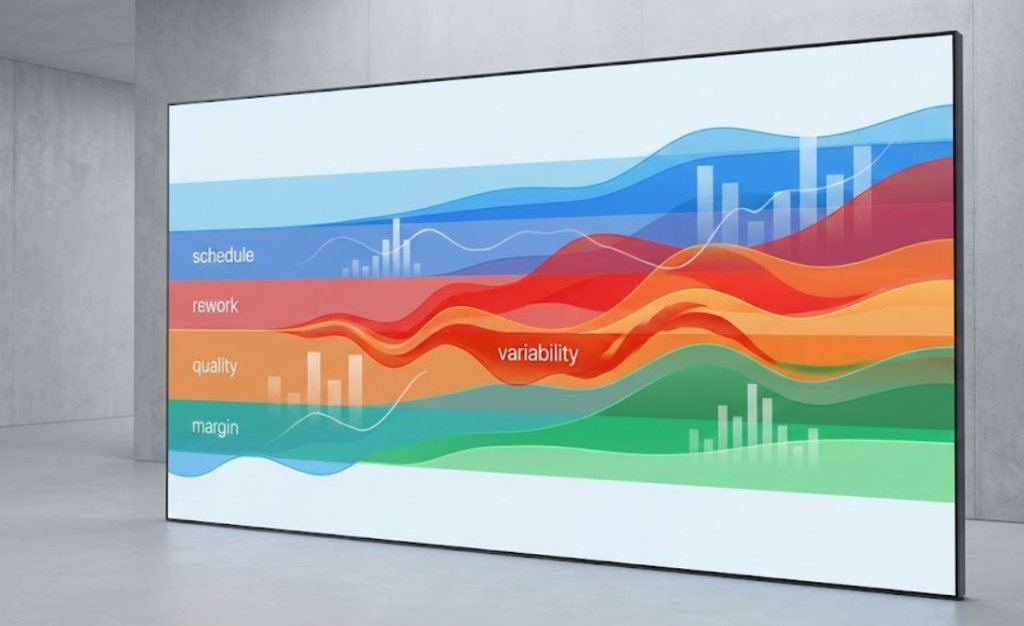
Urgency is not a moral enemy. It’s often a symptom of fragility and variability.
Well-designed improvement reduces urgency over time—but it must be designed.
## The version I defend: less blame, more evidence, less repetition
Three operational principles:
### 1) It must be safe to surface problems
If surfacing a problem makes you look bad, signals will be hidden until they’re expensive. Safety is not permissiveness. It’s a rule: investigate the system first, and separate error from negligence.
### 2) Learning must leave a trace
If learning lives in conversations, it disappears. The trace doesn’t have to be long—just enough to reconstruct what happened, what we decided, and what changes.
### 3) Target repetition, not episodes
I don’t optimize the “fire.” I optimize the condition that makes the fire repeatable. Fixing only the case buys calm, not capability.
## The key question: what kind of problems do you want people to bring you?
Punish failure → you get excuses. Reward heroics → you get fires. Reward learning → you get early signals.
A mature company doesn’t eliminate issues. It eliminates repeated issues.
## How I detect real culture without surveys
I watch:
1) where the friction backlog lives (system or hallway talk?)
2) how priority is decided (impact + repetition, or noise?)
3) what happens after review (new rule/standard, or “we’ll be more careful”?)
If the typical conclusion is “let’s pay more attention,” that’s not learning. That’s hope.
## The most useful indicator: repeated patterns with variable surfaces
Same family of failures, different external forms, same impacts: delays, adjustments, claims, concessions.
I don’t look for culprits. I look for the design pattern that enables repetition.

## Prioritization: criteria before energy
Small businesses often try to improve “everything” and end up improving “nothing.”
I prioritize with:
-
- impact on the promise (date/quality/margin)
-
- frequency or repeat risk
-
- detectability (if you can’t detect it, you can’t control it)
No implementation is required to build this map—just an evidence-based conversation.
## Leadership that builds continuous improvement doesn’t “motivate”: it protects the loop
Culture isn’t imposed. It’s enabled.
Leadership enables it by:
-
- protecting a minimal learning space even under pressure
-
- asking for evidence instead of opinions
-
- converting decisions into reconstructible standards
Then improvement stops being “extra.” It becomes work.
## Common design mistakes that kill improvement culture
-
- treating improvement as a one-off project
-
- measuring activity instead of impact
-
- confusing transparency with exposure
-
- reviewing without deciding
-
- rewarding fires instead of prevention
These create cynicism.
## Closing
I summarize continuous improvement culture as:
“Truth can move here—and when it does, the system learns.”
That reduces friction, lowers urgency, and protects margin through a disciplined loop.
If you want, we’ll review it in 15 minutes: where repetition is hiding, where learning evaporates, and what criteria to use to build improvement without theater or bureaucracy.