
# Origin error: weak design breeds technical problems
Plan poorly and you’ll repair forever.

Some issues don’t start on site, in the workshop, or in logistics. They start earlier—when everything still looks “clean”: in design.
I call it an origin error because of how it behaves: first it’s invisible, then it becomes normal, and when it finally explodes there’s no time left to debate blame. At that point, only one thing matters: your margin is leaking into rework, and the buyer’s trust is beginning to crack.
This isn’t a technical playbook. No step-by-step, no scripts, no templates, no closed checklists. What I will give you is more useful for decision-making: signals, risks, criteria, and diagnostic questions to spot when design is planting problems—and when it’s protecting the promise.
## The telltale symptom: it fits on screen, but not in real life
If I have to choose between a hard problem and an ambiguous one, I’ll take the hard one every time.
Hard problems get tackled. Ambiguous problems get distributed. And in high-ticket projects, ambiguity is a luxury you pay for.
Common signals of weak design:
-
- drawings that allow two interpretations without anyone noticing
-
- specs built on “it’s obvious” assumptions
-
- materials chosen for looks without grounding functional impact
-
- critical decisions marked “TBD” that travel unnoticed until late
-
- vague equivalents (“similar”, “as available”, “standard”).
When I see this, I don’t think “bad design.” I think an incomplete system: there’s no mechanism turning intent into an executable reality.
## What’s at stake isn’t only technical—it’s the promise
Buyers don’t purchase drawings. They purchase an experience.
That experience is held by a chain of coherence: what is imagined, explained, quoted, built, and installed.
Weak design breaks that chain in two ways:
- Execution breaks: clashes, adjustments, “creative fixes,” re-planning.
- The narrative breaks: the buyer stops feeling control and starts feeling uncertainty.
In premium contexts, uncertainty is poison. Even if you “fix it,” what the buyer remembers is the feeling that the project survived on improvisation.
## The most common trap: confusing flexibility with undefinedness
Flexibility is valuable when it’s governed. Undefinedness is dangerous when it’s normalized.

I separate the two with one uncomfortable question:
Which decisions are being made late because nobody closed them early?
If the honest answer is “many, but that’s how we work,” your installation becomes an emergency design office.
That isn’t flexibility. That’s moving cost and risk to the worst possible moment—when you’re already in, with the buyer watching.
## Where hidden cost is born: micro-decisions with no owner
Weak design rarely fails because of one big decision. It fails because of many small ones:
-
- an edge detail left open
-
- a tolerance assumed
-
- an approximate measurement
-
- a material choice without functional criteria
-
- a compatibility taken for granted
-
- a site condition nobody validated.
Each micro-debt feels cheap. Then it accumulates.
And once it accumulates, you meet the silent enemy of profitability: distributed rework. Nobody sees it end-to-end, because every area sees only “their piece”: an adjustment here, an extra visit there, a call, a complaint, a warranty.
## The friction point: “it wasn’t in the drawing”
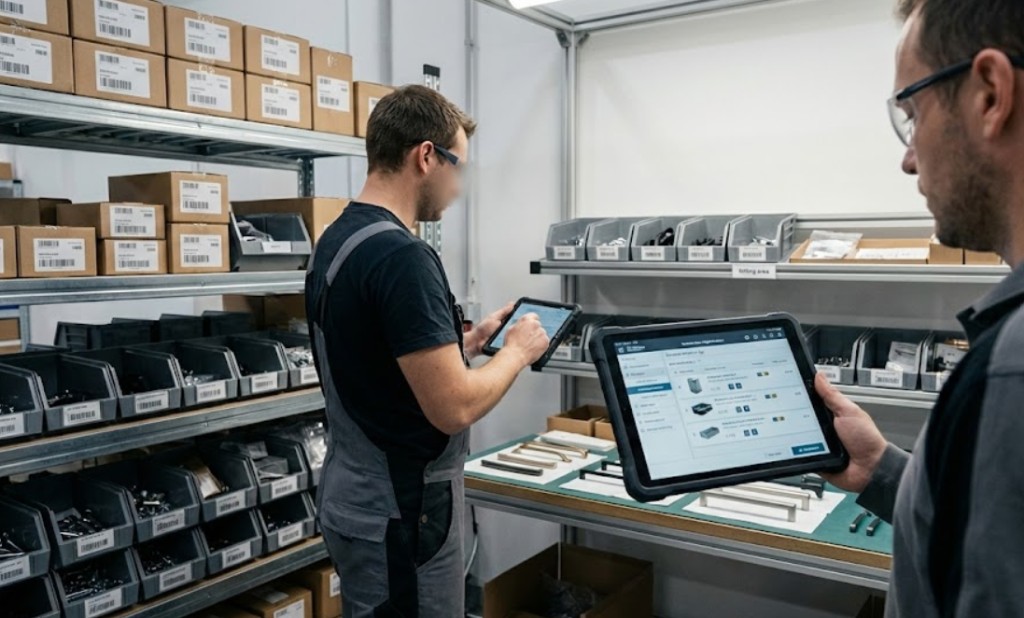
One phrase matters more to me than any KPI: “it wasn’t in the drawing.”
Not because of the phrase itself—but because of what it reveals:
-
- the drawing is a partial truth
-
- decisions are implicit
-
- the handover between sales–design–production–installation is leaking
-
- the project is being solved on site, not in the system.
When the project is solved on site, the cost isn’t only money. It’s reputation—because the buyer witnesses the chaos.
## Why it’s not trivial: design is the frame
If design is the frame, any early crack grows later.
It doesn’t have to be a dramatic mistake. It can be a structural weakness:
-
- details that force manual adjustments
-
- outcomes dependent on one person’s craftsmanship
-
- material combinations that require perfect conditions
-
- beautiful solutions that are fragile under site variability.
Then the domino effect starts:
a “small” adjustment changes a junction;
the junction changes clearance;
clearance changes alignment;
alignment changes a door; and suddenly you’re talking warranties and responsibility.
Not drama—physics.
## Early signals that design is planting problems
No closed checklist here. But these are signals I look for:
-
- the team must “interpret” more than “execute,”
-
- late questions that should have been resolved earlier
-
- too many exceptions per project
-
- changes accepted without thinking through execution and after-sales
-
- installation depends on “making it fit,”
-
- the buyer receives different messages depending on who speaks.
When these repeat, you’re not facing isolated incidents. You’re facing a pattern.
## Trade-offs nobody wants to face (but they decide margin)
Design always contains tensions. The problem is hiding them instead of governing them.
Real tensions:
-
- sales speed vs specification clarity
-
- creative freedom vs repeatability
-
- visual premium vs defendable premium (fewer issues)
-
- customization vs operational complexity
-
- late decisions vs promised lead times.
There’s no perfect answer. There’s only what you decide with criteria—and what you leave to chance.
## Diagnostic questions I use to spot origin errors

If you want to know whether your issues start in design, ask:
-
- What part of the project is still being “decided” during installation?
-
- Which detail keeps returning as an issue across different buyers?
-
- Where does truth get lost: drawing, quote, or handover?
-
- Which materials are chosen by habit and punish execution later?
-
- How often is the “solution” cutting, adapting, improvising?
-
- How dependent is success on a specific person who “knows how”?
If several answers point to improvisation, the origin is clear.
## What changes when design is solid
When design is solid, “boring” things happen—and that’s exactly what I want in premium projects:
-
- fewer internal urgency conversations
-
- fewer extra visits
-
- fewer “we’ll fix it on site,”
-
- less buyer friction
-
- fewer avoidable warranties.
It doesn’t look like magic. It looks like calm.
And in high-ticket sales, calm converts.
## Closing: prevention in design isn’t bureaucracy—it’s elegant survival
Weak design doesn’t only force you to repair. It forces you to justify.
And in premium, justification is lost value.
If the origin is weak, after-sales inherits a problem it can’t compensate with goodwill. That’s why prevention in design is the most profitable long-term move: it protects margin, lead time, and trust at once.