

# Ready to reinvent your sales? Integrate CRM, AI, and consultative sales
The integrated system your company needs to lead the market.
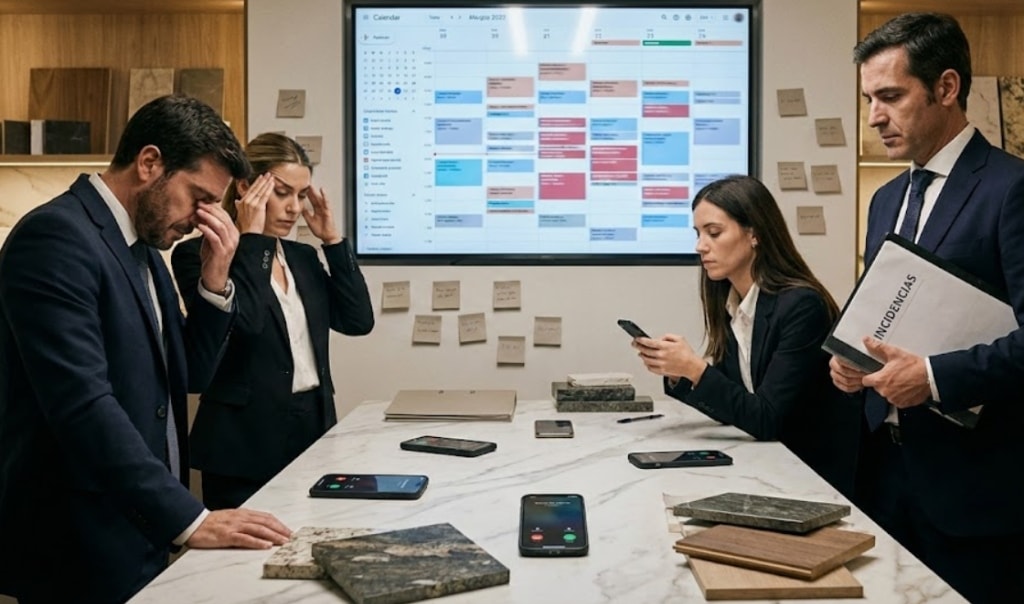
Some companies believe they are "modernizing sales" because they buy a CRM, test an AI, or send their team to a consultative course.
And yet, the funnel remains the same:
-
- opportunities that go cold without explanation
-
- follow-up that depends on the salesperson's character
-
- proposals that drag on
-
- premature discounts to compensate for uncertainty
-
- and an after-sales service that inherits poorly designed promises.
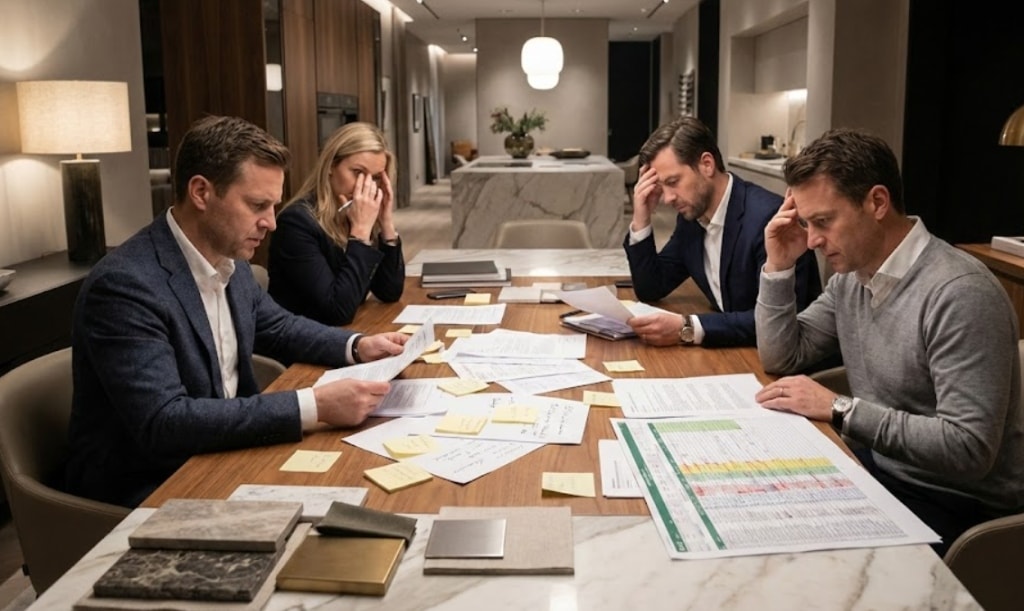
I don't call it a lack of tools. I call it a disintegrated system.
When CRM, automation, and AI live as islands, all you achieve is this: more activity... with the same blindness. More tasks are done, more things are recorded, more "noise" is analyzed. But the criteria remain human, fragmented, and tired.

## The uncomfortable idea: you don't need more technology, you need less friction between decisions
In project businesses, selling is not persuading. Selling is reducing risk for the buyer without manufacturing risk for your operation.
And that only happens if the commercial system achieves three things at once:
-
- memory (CRM)
-
- coordination (automation)
- judgment assisted by signals (AI).
Separated, they are an expense. Integrated, they are an advantage.
## The most common mistake: treating the CRM as a "place to take notes"
When the CRM is an agenda, the pipeline is fragile. When it is institutional memory, the sale becomes traceable, repeatable, and defensible.
The difference is not the software.

The difference is what you govern:
-
- do you govern stages and decisions, or only records?
-
- do you govern "why it advances", or only "what was done"?
-
- do you govern coherence of promise, or only "commercial activity"?
If the CRM does not model the reality of your sale (high ticket, multiple actors, technical uncertainty), it becomes bureaucracy... and the team abandons it.
## AI doesn't save a broken process: it amplifies it
There is a dangerous fantasy: "I put AI in and it improves".
If the data is poor, the AI learns poorly. If the process is incoherent, the AI automates incoherence. If the team sells "by intuition", the AI works without a foundation.
I use AI as a mirror: it reveals patterns that the human does not see.
But it only works if the system gives it context:
-
- clear stages
-
- definitions of advance
-
- opportunity quality criteria
-
- and consistent minimum signals.
The uncomfortable question isn't "do you have AI?".

The question is: do you have a funnel readable for a machine and a person?
## Consultative selling without technological support: polite heroism
Consultative selling in high ticket requires:
-
- really listening
-
- mapping actors
-
- ordering requirements
-
- sustaining long conversations
-
- and maintaining coherence.
Without support (memory + automation + signals), the salesperson ends up doing the same thing:
working more to sustain what the system should sustain.

And when the system doesn't sustain, two pathologies appear:
-
- the hero salesperson (everything depends on one person)
-
- or the exhausted salesperson (everything is done "halfway").
Consultative is not "speaking better". It is designing a decision experience.
## Why isolated investments are wasted (and also worsen the internal climate)
I have seen this pattern too many times:
-
- CRM without governance: the team feels it as control.
-
- AI without data: the team feels it as smoke.
-
- Consultative training without system: the team feels it as pressure.
Result: cynicism. And when there is cynicism, change dies.
The tool doesn't fail. The architecture fails.
## What "integral model" really means
I'm not going to give you a step-by-step.
But I will leave you the framework I use to diagnose if there is a system or just loose pieces:
### 1) A common language of advance
If each salesperson interprets "real opportunity" differently, the pipeline is an opinion.
### 2) Signals before opinions
I'm not interested in "feeling". I'm interested in detecting signals: silences, changes of interlocutor, deviations, recurring doubts.
### 3) Automation to liberate humanity, not to spam
Automating is not chasing. Automating is sustaining continuity without exhausting the team.
### 4) AI to prioritize focus, not to fake activity
AI should help you see where to intervene, not to generate noise.
### 5) Orchestration with operations
If sales promises without coordination, after-sales pays the bill.
## Diagnostic questions I use
-
- Does your CRM capture decisions... or just tasks?
-
- Can you explain why leads go cold... or do you just intuit it?
-
- Does your AI have consistent data... or depend on "decorative" fields?
-
- Does your consultative team have institutional memory... or depend on WhatsApp and memory?
-
- How many opportunities advance by method vs by charisma?
-
- How much of your after-sales is a consequence of poorly designed promises?
If the answer is "it depends on who handles the case", you know the truth.
## A quote that haunts me

In The Avant-Garde Salesperson I summarized it like this:
> “Generar un flujo constante de prospectos cualificados… nutriendo cada oportunidad de manera sistemática con un CRM.”
It's not a technology phrase. It's a system phrase.
## Closing
Reinventing the sale is not modernizing tools. It is redesigning the complete model: memory (CRM), continuity (automation) and judgment (AI) at the service of a consultative sale that reduces risk without manufacturing operational debt.
If it sounds like a challenge, perfect. Challenges worth taking aren't fixed with patches.