
In high-ticket physical projects, I see the same tension again and again:
-
- Sales needs flexibility to fit expectations.
-
- Operations needs control to build, coordinate, and deliver without emergencies.
If you try to solve that tension with a single methodology, you usually lose somewhere.
Pure waterfall feels safe, but clients push changes sideways. Pure agile feels flexible, but operations becomes continuous experimentation with real deadlines, materials, and installers.
That’s why I rely on a hybrid approach—not as a label, as a system.
## Hybrid is not an improvised mix
Hybrid is not “a bit of everything”.
For me, hybrid means:
-
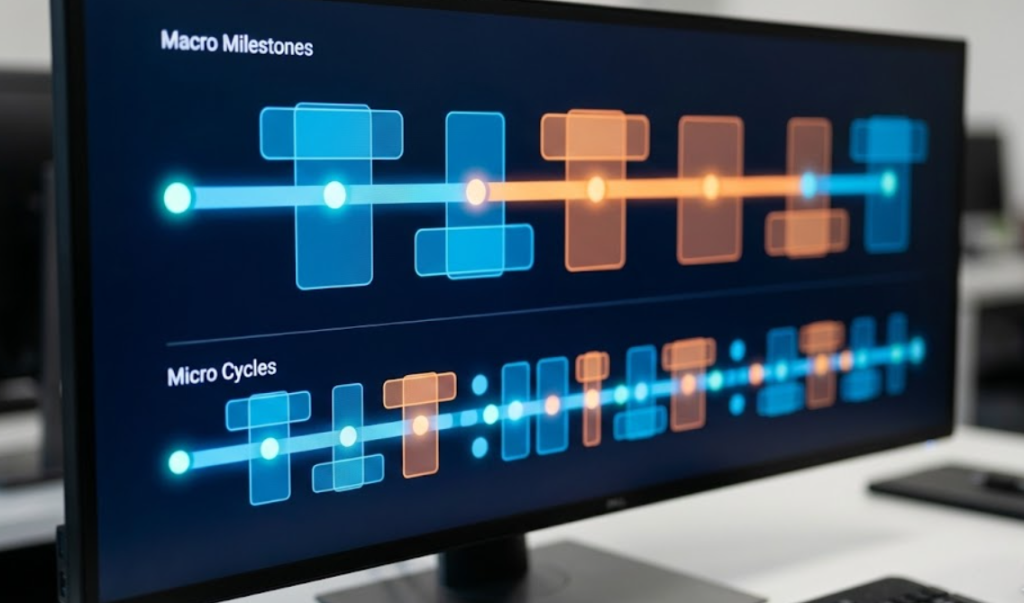
- macro control: defendable milestones, gates, dependencies, capacity.
-
- micro flexibility: short decision cycles, feedback, prioritization, validation.
A dual cadence: one rhythm to land execution, another to unlock decisions.
Without that dual cadence, two margin-killers appear:
1) late decisions that force urgency
2) repeated decisions that drain authority and energy
## The real job: you don’t manage tasks, you manage decisions
In complex projects, outcomes are driven by decision quality:
-
- what is fixed
-
- what can change
-
- when change stops being cheap
-
- who validates
-
- what becomes locked so execution can move
If your company doesn’t manage this, the customer will—through anxiety. And anxiety becomes comparison, negotiation, late changes, and conflict.
## Waterfall-only: the illusion of certainty
Planning everything upfront sounds good. Customization makes it fragile.
Signals:
-
- the “plan” is frozen on paper but changes in conversations
-
- technical validation shows up late
-
- installation becomes the place where decisions happen
That’s not control. That’s appearance of control.

## Agile-only: the illusion of infinite flexibility
In software, iteration is cheap. In physical delivery, it isn’t.
Signals:
-
- everything is priority
-
- you “progress” but don’t decide
-
- there is no current version
-
- customers assume change is always free
That’s not agility. That’s fragility.
## Hybrid is built around reversibility vs irreversibility
The key is separating:
-
- stages where change is cheap (exploration/decision)
-
- stages where change is expensive (production/logistics/installation)
Most damage happens because teams don’t separate “when”.
## Three layers I keep distinct
- Promise layer (customer): expectations, priorities, boundaries.
- Decision layer (design/validation): options, criteria, trade-offs.
- Execution layer (ops): capacity, sequencing, purchasing, delivery.
Healthy hybrid means each layer has its rhythm, but all share traceability.
## Signal you need hybrid: your plan breaks at the first change
If each change forces date chaos, internal renegotiation, and third-party scrambling, you have a fragile plan. Hybrid doesn’t remove changes; it prevents changes from breaking you.
## Signal: customers keep asking “is this defined?”
Repeated “can we still change?”, “what’s next?”, “who confirms?” is not curiosity—it’s missing gates.
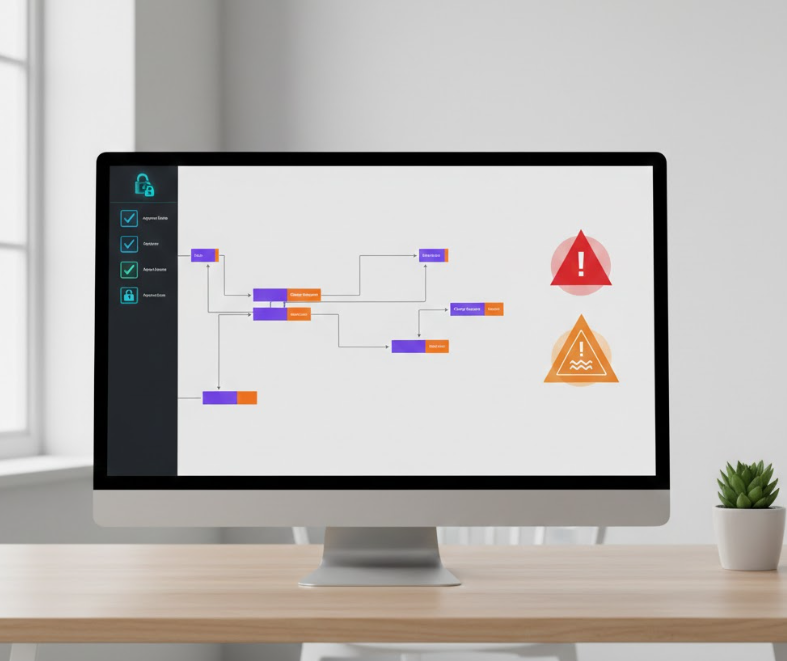
A gate isn’t bureaucracy. It’s a control signal: “this is validated and has consequences.”
## What reveals a healthy hybrid (without implementation details)
I look for four things:
1) a single current version (visual + decisions)
2) a decision backlog (pending decisions with criteria)
3) gates (where the cost of change shifts)
4) capacity visibility (what the system can absorb without breaking)
When one is missing, heroics fill the gap.
## The core pattern: macro commitment, micro exploration
Macro commitment: defendable milestones and dependencies. Micro exploration: short decision loops before locking.
Lock too early: you frustrate the customer. Explore forever: you frustrate operations.
## Where “hybrids” fail
-
- adopting vocabulary without changing decision governance
-
- confusing flexibility with “everything is possible”
-
- treating feedback as change (instead of information)
## How I diagnose margin protection vs margin burn
I watch:
-
- when changes occur
-
- handover quality (ops receives reference, not a story)
-
- traceability (can we reconstruct why?)
-
- repetition (same decision twice?)
-
- team state (control vs survival)
If the team lives in survival, the methodology is theatre.
## Closing
The choice isn’t agile vs waterfall. It’s whether you have a system that governs decisions and protects execution.
If you want, I’ll diagnose where your method becomes debt, where gates are missing, and which changes are entering late because exploration and execution are not separated.