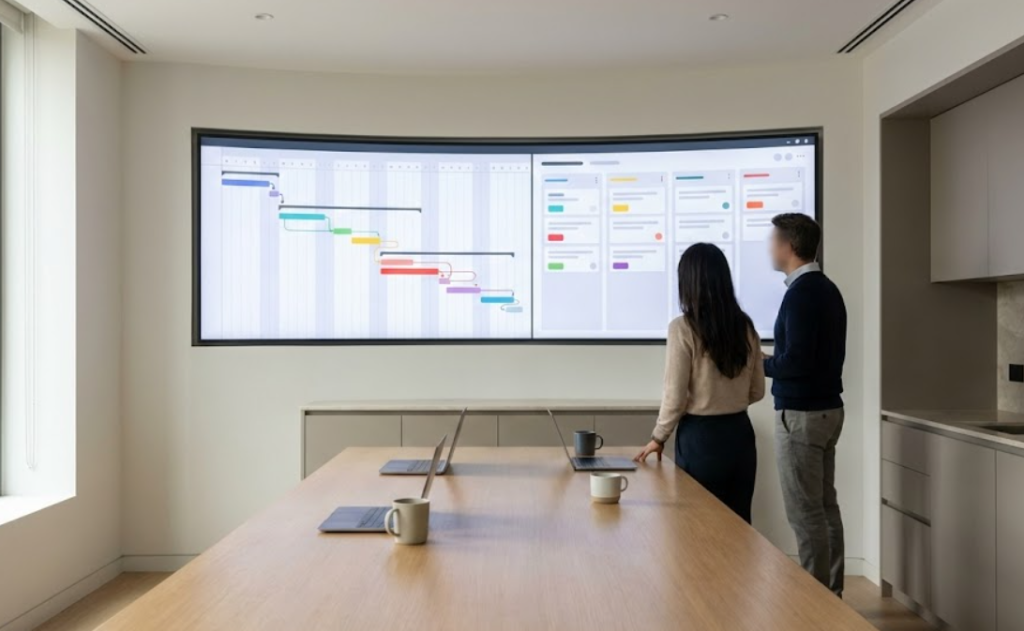


# Effective meetings and management rituals: cadences so nobody has to chase anyone
When a company needs “chasing” to move work forward, the problem isn’t people. It’s the system.
I’m not a fan of “more meetings.” I’m a fan of less chasing.
In project businesses, coordination breaks through a hundred micro-leaks: unanswered messages, decisions postponed, technical doubts that never get prioritized, installers arriving to missing parts, clients requesting changes that nobody dares to frame as impact.
When that happens, the company invents the most expensive substitute: chasing.
This is not a handbook of agendas. No scripts, no templates, no step-by-step. I’m sharing signals, risks, and decision criteria to design rituals that turn information into decisions—and decisions into owned actions.
## Meeting vs governance
A meeting can be social, status-reporting, or governance. Rituals are governance: a repeatable mechanism that creates explicit decisions, visible blockers, and next steps with owners.
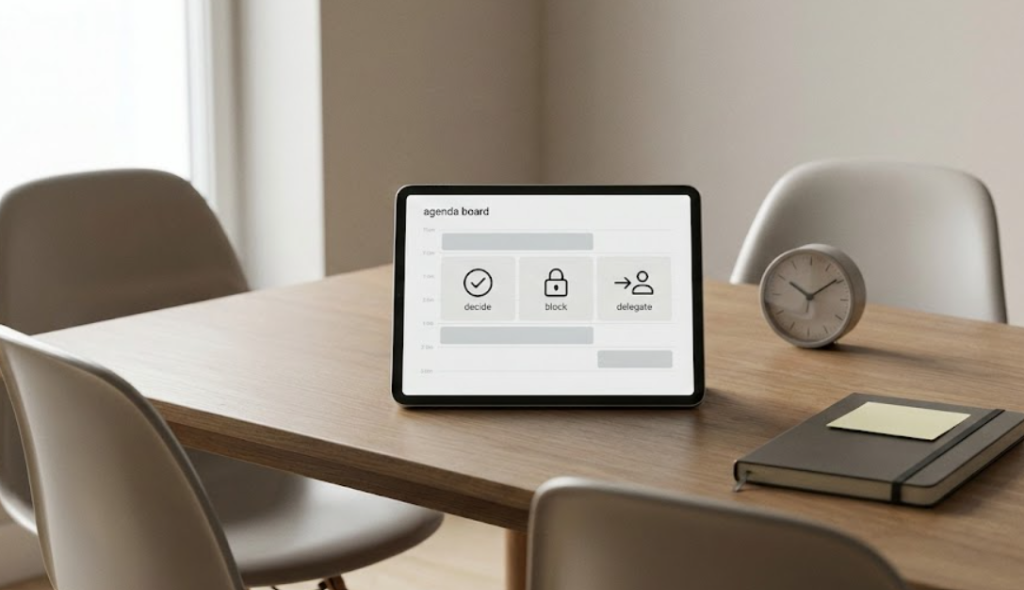
## The telltale symptom: living in “pending”
When “it’s pending” becomes normal, priorities stop being shared and flow becomes personal. Work moves by urgency and insistence, not by system.
## Why meetings fail
They mix conversation types, talk tasks instead of decisions, share information without turning it into ownership, and confuse alignment with consensus.
## My mental model: rituals as system layers
Flow layer, blockers layer, exception decisions layer, learning layer, and promise-protection layer. You don’t need many meetings. You need each one to have a non-negotiable purpose.

## Signals your rituals are broken
No shared context, “we’ll see” endings, actions without owners, growing backlog with no stop decisions, recurring blockers, hallway fixes, and clients learning the truth late.
## The core design: decision circuits
Recurring decisions need a place, cadence, criteria, and owner. Otherwise they show up as emergencies.
## Expensive vs cheap meetings
Meetings are expensive when they repeat and don’t prevent future fires. They are cheap when they reduce chasing, rework, and delays.
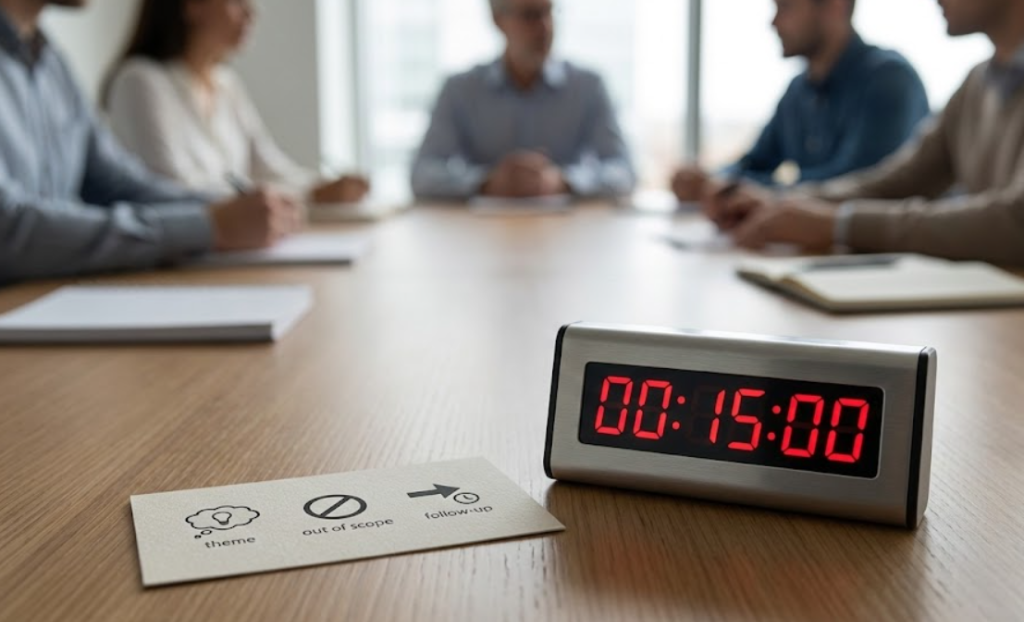
## Diagnostic questions I use
Where is real priority decided? Which blockers have owners vs “everyone”? What is postponed systematically? How much coordination depends on private chats? What truths reach the client late?
## Trade-offs
Speed vs inclusion. Clarity vs comfort. Transparency vs ego. Stability vs flexibility. The goal is not perfect meetings. It’s a defensible company.
## Closing
Promise is sustained by coordination. Sustainable coordination isn’t bought with more messages—it’s designed with rituals.