
# Quality at the source: moving from final inspection to process
When your final QC grows, you’re often not improving—you’re covering a leak.

For years I’ve seen the same operational comfort blanket: “We have final inspection, so we’re safe.”
My experience is the opposite: if quality depends on catching issues at the end, you’re already late. Not because inspection is useless (it isn’t), but because it often becomes a structural patch: you detect defects after you’ve consumed time, materials, and capacity. Every late defect carries a double cost: fixing it, and letting it be created in the first place.
I call that “reactive quality.” It usually comes with the full package: rework, urgency, internal friction, stretched promises, and margin erosion that nobody can pin on a single moment.
This is not an implementation manual. I’ll focus on one thing: how I detect whether you’re trapped in final inspection, and how to locate where the defect is injected so you can move quality to the source.
## The final inspection trap (and why it becomes addictive)
Final inspection has a psychological advantage: it feels like control. You see it, you touch it, you decide.
But it also creates a risky loop:
-
- You find issues at the end, you “fix and ship.”
-
- If you “fix and ship,” the true cause remains untouched.
-
- If the true cause stays untouched, the defect returns.
-
- If it returns, you add more inspection, more filters, more signatures.
Without noticing, final inspection stops being control and becomes a parallel rework factory.
At that point, your best people don’t produce more—they produce the same and repair on top.
## Clear signals of reactive quality (3 means it’s a pattern)
These are the signals I look for first:
- Rework is “normal” (not measured, but assumed).
- Quality depends on specific individuals (“if X is here, it’s fine”).
- The end of the line is saturated (queues, urgency, accumulation).
- Failures repeat with different names.
- Criteria change with pressure.
6) The customer finds what “we didn’t see.”
- Corrections arrive late (already packed, already on the way).
8) There is no operational definition of “good.”
If this sounds familiar, the question is not “how do I inspect better,” but “where is the defect born and why can it pass unnoticed.”
## COPQ: the silent leak that doesn’t look like a single cost
When I say COPQ (cost of poor quality), I’m not only talking about scrapped parts.
I mean everything it costs you to “make it work”:
-
- adjustment hours
-
- extra visits
-
- rush transport
-
- repeated pieces
-
- emergency purchases
-
- planning holes
-
- commercial tension on lead times
-
- reputation and trust.
The dangerous part is that COPQ rarely hurts as one big bill. It hurts as daily micro-leaks—so it becomes normal.
## “Quality at the source” is not “more checks”—it’s moving the check to the right place
When I say “quality at the source,” I mean a simple principle:
Detect and correct the problem as close as possible to where it is created, at the lowest possible cost.
That changes the focus:
-
- from “who catches it at the end?”
to “what must be impossible to pass without detection?”
-
- from “how do I fix it?”
to “why could it happen and slip through?”
And for me the key idea is: every defect has an injection point.
## The map I use to find the injection point
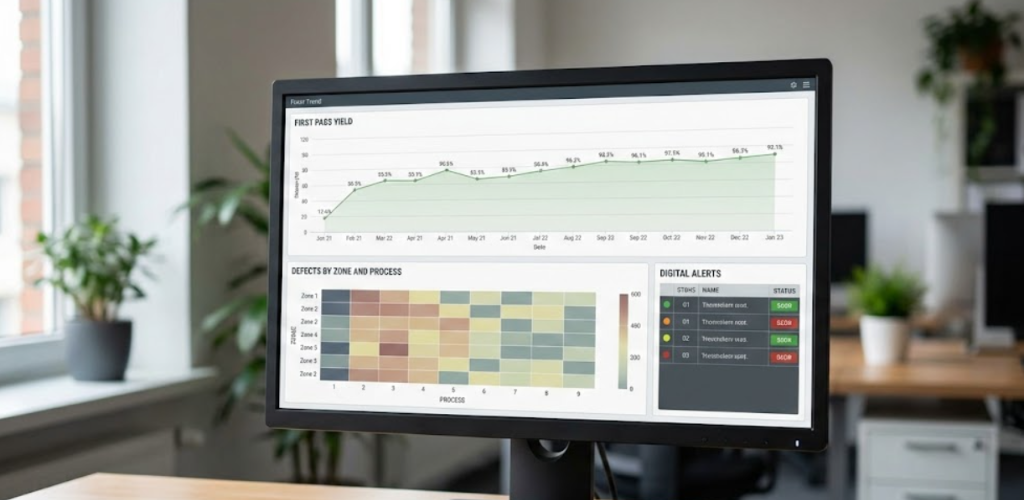
I usually locate defects in five typical zones:
1) Incoming (materials/components)
2) Preparation (measurement, marking, base data)
3) Transformation (cutting, machining, assembly)
4) Finishing and packing
5) Interface with the environment (fit/adjustment)
The goal isn’t to blame a zone. It’s to identify where the defect is created and why there is no early alarm.
## The most useful (and ignored) indicator: first pass yield
I don’t need a hundred metrics. I need one:
First pass yield: the percentage that goes right the first time, without rework.
If FPY is low, it doesn’t matter how much inspection you have—you’re paying quality with hours and stress.
And if you don’t know FPY (even by sampling), you’re managing quality by feelings.
## Self-checks: the most profitable “yes” you can get
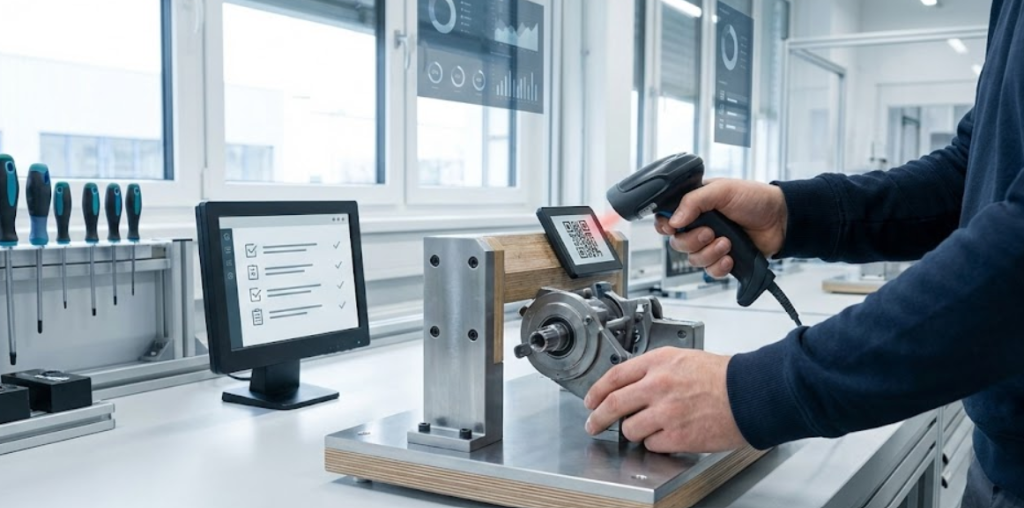
Self-check is not “everyone figures it out.” It’s an operational agreement:
-
- the standard is clear (what “good” looks like)
-
- the operator has means to verify (gauge, template, reference)
-
- the record is minimal and digital
-
- there is a useful stop mechanism when something is off.
I see self-check as turning quality into a property of the process, not an event at the end.
### Signs your self-check is fake
-
- “Self-check” means signing without checking
-
- you measure “compliance,” not avoided defects
-
- there is no time to verify
-
- stopping is punished, so nobody stops
-
- standards change depending on who reviews.
That’s theatre—and theatre only adds friction.
## Useful stops: the short cost that prevents the long cost
Stopping is scary under lead-time pressure. I get it.
But I split stops into two types:
-
- reactive stop: you stop because it’s already a mess
-
- preventive stop: you stop because you detected an early deviation.
The second is the one that protects you. It buys time so the defect doesn’t become a chain.
## Control points: fewer is better (if they’re well placed)
A common mistake is filling the process with “just in case” controls. That creates bureaucracy, and bureaucracy creates shortcuts.
I prefer few control points, with intent:
-
- critical: if it fails, high impact (functionality, compatibility, massive rework)
-
- sensitive: if it fails, repeated corrections or degraded experience
-
- learning: temporary checks to understand a new defect.
The guiding question is:
> What defect do I want to make impossible to pass without detection?
If the answer is “anything,” you’re designing a system nobody can sustain.
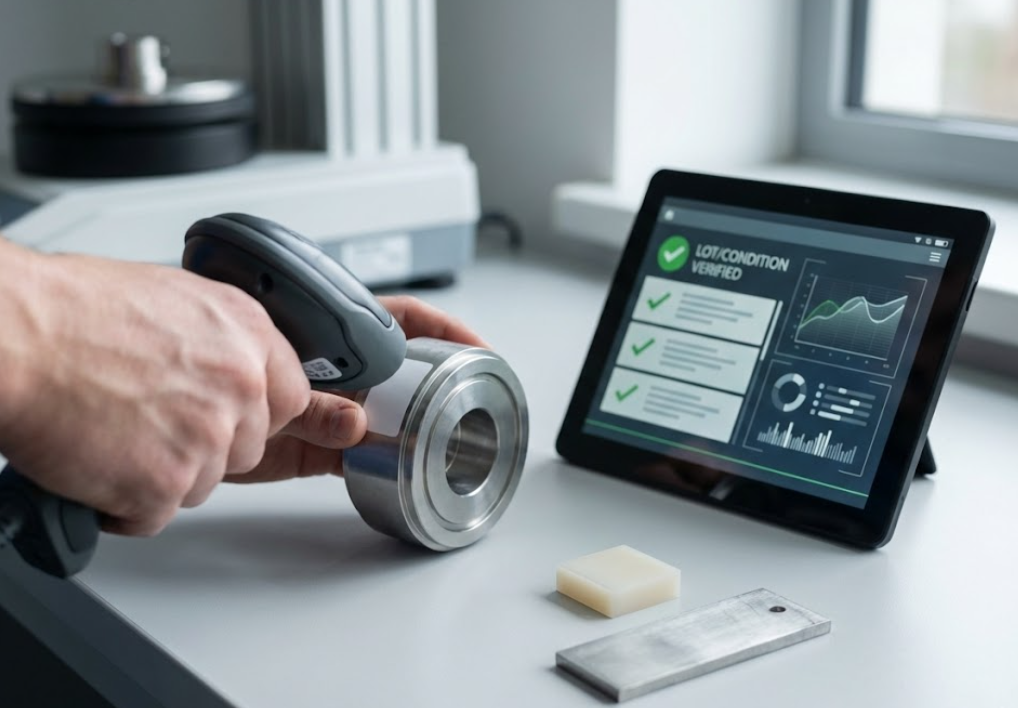
## Minimal traceability: not to police, but to learn
When a defect repeats, I want to answer fast:
-
- which lot/material
-
- which condition/configuration
-
- which station
-
- which variant
-
- which decision changed.
Not to hunt blame—just to reduce the hypothesis space.
## Diagnostic questions I use to locate the leak
If I had an hour with you, I’d ask:
-
- What share of work is reworked (honest estimate is fine)?
-
- Where is the defect usually discovered: in-process or at the end?
-
- What’s the most frequent defect and what’s the most expensive one?
-
- What defect “suddenly” appears when everyone is rushed?
-
- What part of the standard lives only in two people’s heads?
-
- Where do you rely on “eyeballing it”?
-
- What variables change without being recorded?
With those answers, the picture usually appears: defects aren’t mysterious—they’re unprotected.
## What typically happens when you move quality to the source
Without promising miracles:
-
- rework drops before inspection grows
-
- planning becomes more reliable
- teams breathe—less ambiguity, fewer fights.
Quality at the source is not “more demanding.” It’s “less ambiguity.”
## Closing
If you want, I can help you detect whether you’re trapped in final inspection, locate the defect injection point, and define the minimum self-check / useful stop / control-point system that can survive without bureaucracy.