

I’ve seen renders close deals in minutes. And I’ve seen renders quietly destroy projects.
Because a render isn’t “a nice picture”. It’s a visual promise. In high-ticket projects, a visual promise hardens into expectation: the client stops imagining and starts remembering the image as if it were a contract.
When visualization is governed well, it accelerates decisions and protects margin. When it isn’t, it creates something most teams don’t measure: operational debt.
Operational debt is what you’ll pay later in late changes, “that’s not what I saw” conflicts, logistics urgency, install friction, and aftercare that burns reputation.
This isn’t about choosing software. It’s about detecting whether your renders and VR are selling well… or selling future problems.
## The trap: treating visualization as marketing
Many teams treat renders and VR as marketing assets: impressive, emotional, “high conversion”.
The hidden cost comes later.
In complex buying, visualization must do three jobs:
1) enable decisions with criteria
2) align sales, design and operations into one narrative
3) convert visuals into governable reality (versions, boundaries, validations)
If you only do #1, you accelerate friction.
## The most common symptom: “the client fell in love before it was feasible”
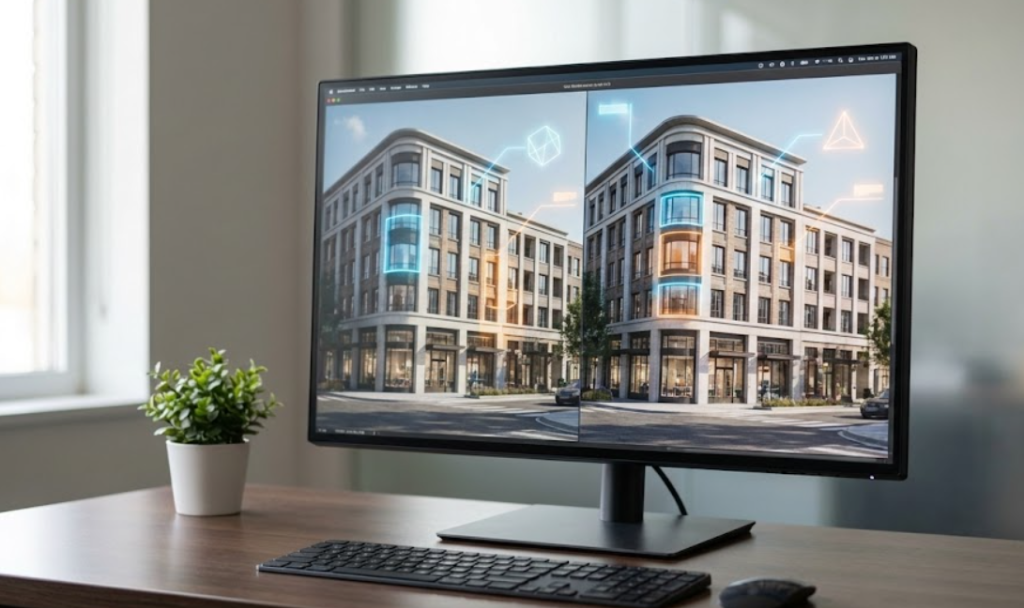
A perfect image creates predictable behavior:
-
- emotion spikes
-
- critical thinking drops
-
- a reference becomes rigid
Then reality shows up: constraints, installation conditions, dependencies. If that reality appears late, the client experiences it as disappointment.
Listen for diagnostic phrases:
-
- “But it didn’t look like that in the render.”
-
- “I understood it differently.”
-
- “Can we keep it like the image?”
-
- “So what exactly am I buying?”
That’s not an aesthetic debate. It’s a trust debate.
## Visual promises need boundaries—or margin pays
If visualization doesn’t define boundaries, the client assumes everything is literal.
Boundaries don’t kill excitement. They make the promise defendable.
## Render vs VR: different tools, different risks
Render strengths: clarity, comparison, fast emotional “yes”. Render risks: interpreted as absolute precision, late change triggers, quote mismatch.
VR strengths: spatial understanding, proportion realism, fewer surprises. VR risks: turns “possible” into “promised”, multiplies micro-feedback, explodes versions without control.
## The key indicator: decision object or desire object?
-
- If the render helps the client choose with criteria, it’s a decision object.
-
- If it’s used to “convince” and figure out feasibility later, it’s a desire object.
Desire object = operational debt.
## The hidden killer: version drift

Projects explode when nobody can answer:
-
- which version is current
-
- what changed since last version
-
- who approved what
-
- what is locked vs pending validation
When you can’t answer that, the client protects themselves: written confirmations, screenshots, repetition, and price pressure.
## The most dangerous mismatch: render vs quote
If the image screams “premium certainty” but the quote feels like a cold list, the client suspects hidden changes.
Quick diagnostic: if the client asks “does this include what we saw in the render?”, your system is weak.
## The render as a psychological contract
Even if it’s not a legal contract, it behaves like one:
-
- what’s missing feels like loss
-
- what’s shown feels like a right
-
- any difference feels like breach
That’s why visualization must reduce ambiguity, not amplify it.
## VR adds an extra risk: sensory certainty
In VR the client walks the project. That sensory certainty makes later proportion changes feel bigger than they are.
VR without gates and versioning is a friction multiplier.
## What I observe to diagnose governance
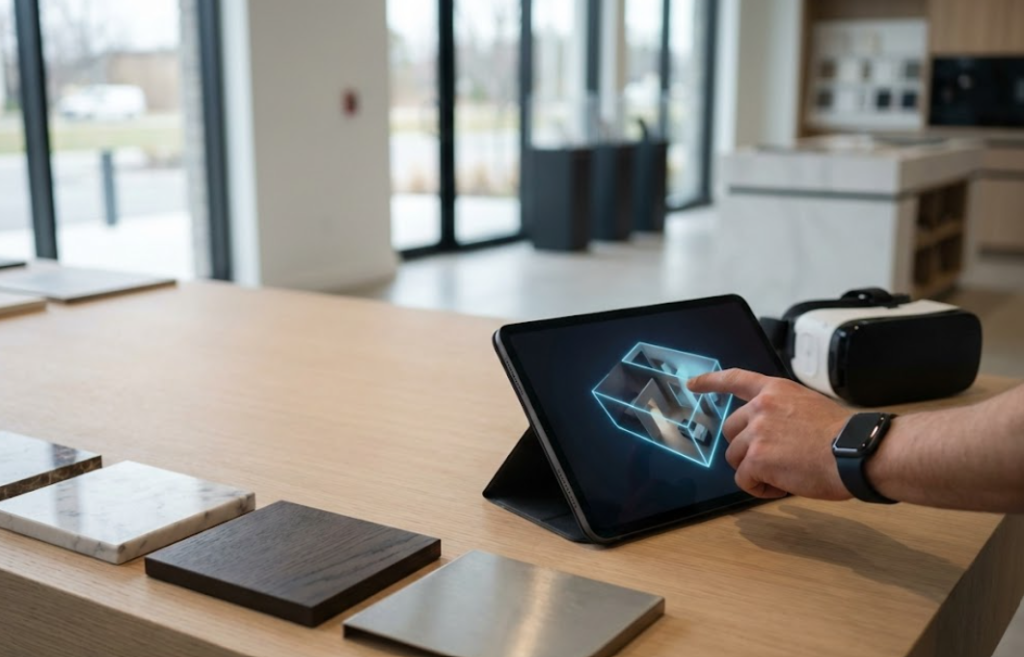
I don’t need your tools. I look for:
-
- where the first “but” appears
-
- how many decisions are repeated
-
- how much communication is “confirmation”
-
- when third parties enter the loop
-
- whether the team can say what’s locked
No locks = no control.
## The critical moment: when visuals become executable
Healthy processes have a clear moment when visuals stop being exploration and become execution reference.
Without that moment, design keeps changing while production moves, planning runs in parallel to negotiation, installation becomes debate, and aftercare becomes damage control.
## Self-check: is visualization protecting or destroying margin?
1) can your team name the current version instantly?
2) has the client used screenshots to “make it clear”?
3) do changes appear after “we decided”?
4) is there more talk about aesthetics than boundaries and criteria?
5) does signing delay because visuals feel unclear?
6) do installs include “it wasn’t like that” moments?
Two or more “yes” means operational debt is growing.
## Closing
Advanced visualization is not decoration. It’s a promise system. Without governance, it sells excitement and buys problems.
If you want, I’ll diagnose where debt is being created (versions, coherence, gates) and what signals are pushing clients into comparison or late change.