

# Circular economy: waste as revenue (when scrap stops being ‘trash’)
Turning scrap into cash: making “waste” a business model.

When a company calls something “trash,” it usually hides two realities: a cost and a signal.
I don’t approach circularity as a virtue story. I approach it as business architecture: how much cash is left on the table because you don’t govern what you already generate?
No step-by-step here. Just signals, risks, criteria and trade-offs to decide whether waste-as-revenue is real for you—or a distraction.
## Recycling as compliance vs circularity as a model
Compliance recycling reduces guilt. A model changes either cash, total cost, or operational stability. If it doesn’t, it’s narrative.

## Mental separation: scrap, waste, loss
Scrap is flow/design loss. Waste is what leaves the system. Loss is total cost: time, rework, incidents, logistics, firefighting.
## Why most attempts stall
Mixing, intermittency, purity issues, logistics burden, and—above all—no ownership. Without governance, “revenue” becomes an experiment that exhausts operations.
## The unlock: treat waste as a line with owners and rules
If something exits your system repeatedly, it deserves an owner, simple rules, and explicit decisions. Otherwise it becomes the perfect hiding place for variability, late quality, and broken promises.
## The real value isn’t the waste—it's stability
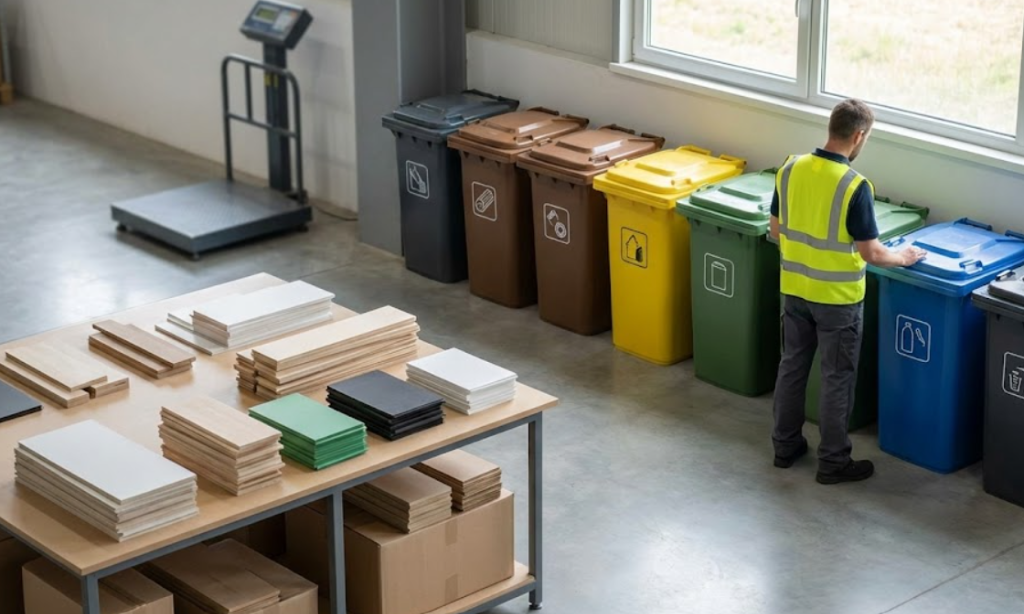
Monetization depends on stable streams: type, purity, continuity, predictability. If your waste shape changes weekly because specs change weekly, you don’t have “monetizable waste.” You have unmanaged variability.
## The key trade-off: revenue vs operational complexity
If circularity creates a parallel process with extra handling, storage, micro-decisions, and failure points, you’re swapping one cost for another. The question is: does it reduce total friction or just relocate it?
## Decision criteria I use
-
- Governable purity
-
- Defendable flow
-
- Logistics that doesn’t punish core operations
-
- Reputation/promise risk understood
-
- Simple governance (few rules, clear owner)
## Circularity starts before waste
Waste is decided upstream: unstable specs, unmanaged changes, formats that create offcuts, late quality detection. Waste is rarely “bad luck.” It’s disconnected decisions.
## Diagnostic questions
Which streams are stable? Where does mixing happen? How much comes from commercial change vs operational flow? Who decides “recoverable” and by what criteria? What happens when volume increases—linear growth or spikes?
## The dangerous temptation: KPI games
Bad incentives hide waste, manipulate sorting, and protect metrics over promise. Profitable circularity is a consequence of governing variability, quality and flow—not a standalone KPI.
## Quick checklist
If you can’t describe your main streams, stability, and ownership without improvising, start with control before talking about revenue.
## Closing
Waste-as-revenue isn’t “recycling more.” It’s turning a silent leak into a governed advantage.
Diagnóstico express