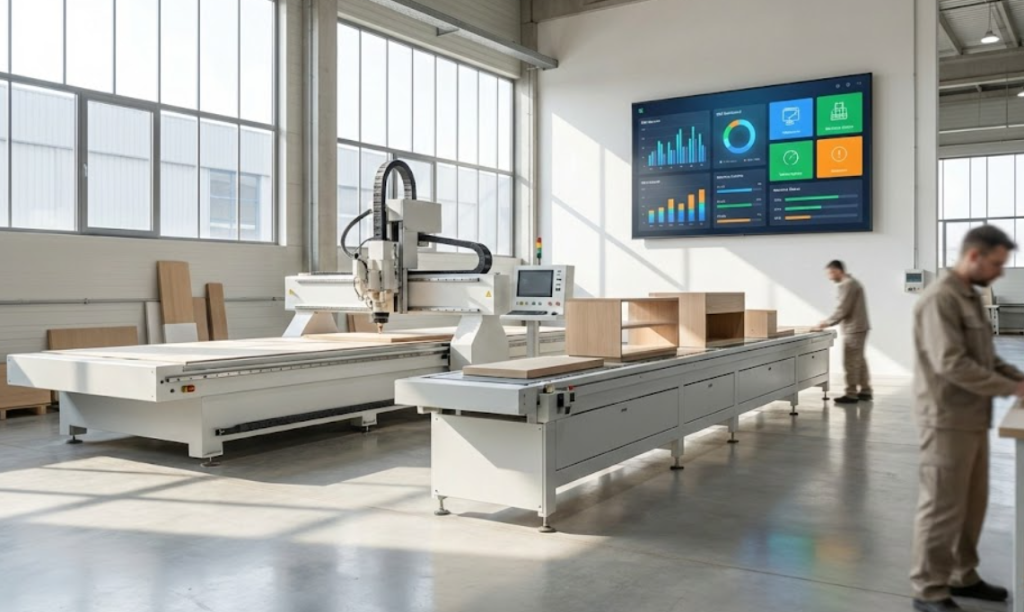


# Mass customization: selling “made-to-measure” without breaking lead times or production
Variety doesn’t break your business. Ungoverned variety does.
I’ve seen companies proudly selling “made-to-measure”… while living in fear. Fear that the next project will be the one that blows up. Fear of committing to lead times. Fear that the shop floor, procurement, or installation will discover too late what sales already promised.
The issue isn’t customization. The issue is confusing customization with saying yes to everything.
Mass customization isn’t more creativity. It’s more architecture.
Product architecture, decision architecture, promise architecture, and coordination architecture—so the customer experience stays premium while operations stay predictable.
This is not a how-to guide for configurators. No templates, no scripts, no step-by-step. What I share here are signals, risks, and decision criteria to diagnose whether your “made-to-measure” is scalable—or expensive heroics.
## The giveaway symptom: “we sell flexibility” but every case hurts
When a company tells me “flexibility is our edge,” I don’t celebrate yet. I ask: is that flexibility designed—or improvised?
Improvisation leaves fingerprints:
-
- late decisions (“we’ll solve it on site”)
-
- internal fights over compatibility (“this won’t fit/mount”)
-
- procurement firefighting (“not available”, “needs substitution”)
-
- post-sales drowning in “small, normal” incidents.
Mass customization should not feel like permanent tension. It should feel like freedom inside boundaries.

## The mental trap: selling variety as if it were only aesthetics
Buyers think customization is choosing finishes, handles, countertops, layouts, accessories. But you and I know each choice can touch the whole system: BOM, procurement, scheduling, machining, installation, service.
The mistake is treating choices as operationally neutral.
If the buyer experiences “total freedom” while the factory experiences “infinite variability,” what you’re selling is not customization—it’s exposure.
## Two distinctions that clean up the chaos: sellable variety vs executable variety
I separate two layers:
-
- Sellable variety: what the market wants and pays for.
-
- Executable variety: what your system can build and install reliably.
Mass customization is expanding sellable variety without collapsing executable variety.
That requires an uncomfortable truth: a well-designed “no” is premium.
## The premium “no”: boundaries that increase trust (and conversion)
Many teams fear boundaries because they expect lost sales. Often the opposite happens: clear boundaries reduce uncertainty.
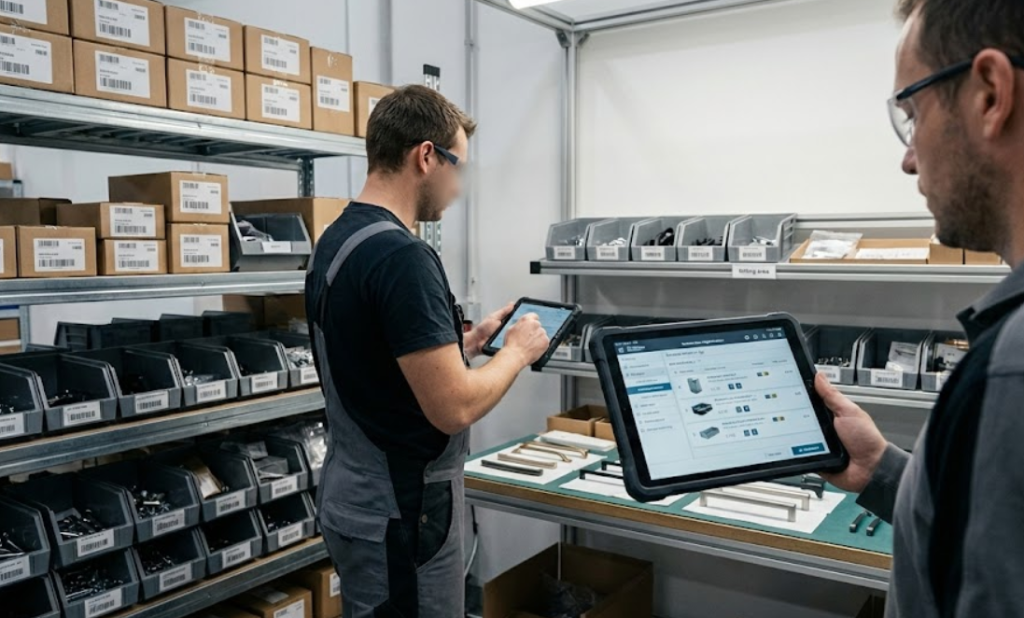
A premium “no” is not a prohibition. It’s a protection of:
-
- lead time
-
- quality
-
- and project coherence.
When boundaries are explicit early, the buyer reads it as professionalism. The dangerous version is saying yes and cutting later—that kills trust.
## Mass customization doesn’t start on the shop floor. It starts in the promise
If I had to choose one control point, it’s this: promise design.
Operations suffer when promises are vague:
-
- “it will look like the render” (with what tolerances?)
-
- “we can deliver fast” (under what dependencies?)
-
- “we can change it” (until when?).
A mature promise isn’t more rigid. It’s more explicit.
## The hidden axis: compatibility (nobody sells it, everybody pays for it)
Compatibility is the secret language:
-
- module-to-module
-
- hardware-to-front
-
- finish-to-supplier
-
- design-to-installation
-
- site-to-product.
Without a shared compatibility language, the company negotiates every job like it’s the first. That’s not premium. That’s fatigue.
## The difference between profitable “made-to-measure” and toxic “made-to-measure”

I can tell by the internal conversation:
-
- Profitable: people talk about decisions (“standard”, “exception”, “risk changes”).
-
- Toxic: people talk about heroes (“X will figure it out”, “depends on Y”).
When it depends on heroes, you don’t have a system—you have memory.
## Trade-offs you can’t escape (so you must decide them)
Mass customization is never free. You always pay in some currency.
### Trade-off 1: variety vs speed
More variety without governance slows everything: quoting, purchasing, production, installation. Speed is protected by deciding what flows and what must be validated.
### Trade-off 2: sales freedom vs operational reliability
Sales wants freedom. Operations wants reliability. Mature companies don’t “pick a winner”; they define decision rights: what can be promised without permission, and what requires validation.
### Trade-off 3: innovation vs stability
If everything changes constantly, you never learn. If nothing changes, you become irrelevant. The key is a stable core with controlled edges.
## Early signals that customization is breaking lead times
I watch for early indicators:
-
- quote cycles stretch because of internal “checks”
-
- small incidents become “normal”
-
- installers constantly ask for confirmations
-
- last-minute substitutions become routine
-
- the team relies on “we’ll fix it on site” language.
When those phrases are routine, customization isn’t designed—it’s improvised.
## Diagnostic questions I use
-
- What portion of your variety is pre-approved by design, and what requires validation?
-
- Who owns compatibility—product, sales, or the loudest voice?
-
- Where do problems get discovered: at sale, on the floor, or on site?
-
- Which changes arrive late, and why do they arrive late?
-
- Can your team explain boundaries without asking for permission?
-
- Does the buyer understand which choices are aesthetic vs operationally consequential?
If the answer is “it depends,” you’re betting.
## What I don’t recommend (because it backfires)
-
- turning every project into a prototype
-
- selling total freedom and silently cutting later
-
- adding options without understanding procurement/install impact
-
- hiding incompatibilities and compensating with heroics
-
- measuring success only by revenue without pricing the operational cost of variety.
## Closing
Real mass customization is not saying yes to everything. It’s designing boundaries, compatibilities, and promises so you can sell variety without breaking lead times or production.