
# Threespine tech and Design for Disassembly: fast installation, easy take-down
Tool-less assembly, fewer incidents, and real circularity in premium product.
When I hear “fast installation” in a premium business, I don’t automatically celebrate. I get suspicious.
Because speed—when it’s not designed—becomes a shortcut: you rush the end and pay later through incidents, second visits, touch-ups, and customer tension.
But there’s a powerful exception: when speed comes from product design.
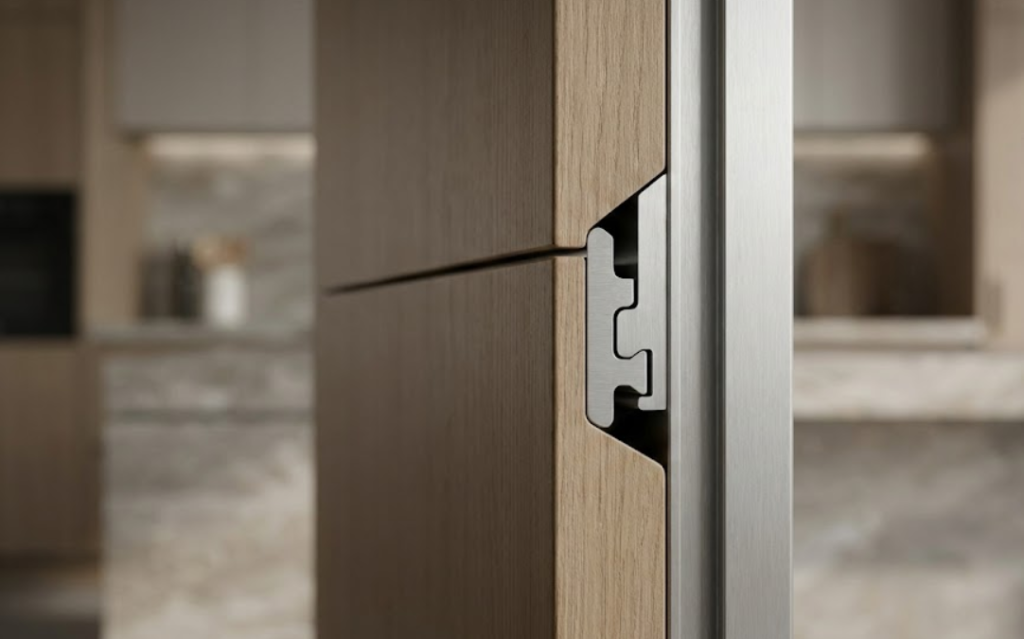
That’s where Design for Disassembly (DfD) and tool-less joining concepts (Threespine and equivalents) can change the operating system—not as a trend, but as architecture: fewer failure points, less site friction, and a product that can be taken apart without destroying itself.
This is not a “how-to” guide. No scripts, no templates, no numeric thresholds. What I offer is signals, risks, decision criteria, and trade-offs to decide whether this approach fits your model—and when it becomes a real advantage.
## The uncomfortable truth: the last mile decides more margin than you think
In high-ticket projects, installation is a multiplier:
-
- it multiplies perceived quality
-
- it multiplies friction cost
-
- it multiplies incident probability
-
- it multiplies how fast you can collect the final payment.
If your product needs “craft adjustments” to look perfect, your margin depends on the installer. And when margin depends on a person, the business becomes fragile.
I want the opposite: installable-by-design, not installable-by-heroics.
## What DfD really means in premium
DfD is not “it can be disassembled.” It’s stricter:
-
- assemble without damaging finishes
-
- disassemble without breaking joints
-
- reassemble without losing precision
-
- access service points without tearing half the project apart.
In premium, DfD is not competing with aesthetics. It’s competing with risk: incident risk, delay risk, rework risk, reputation risk.
The common mistake is to treat DfD as a sustainability label. Operationally, it’s a promise: less field friction.

## The key lever: mechanical joints that reduce variability
When assembly depends on screws, glue, adjustments, and “tweaks,” three problems appear:
-
- final quality becomes person-dependent
-
- time becomes unpredictable
- disassembly becomes destructive (after-sales gets expensive).
Tool-less mechanical joining aims to shift the game: turn part of installation into a controlled click-fit, more repeatable and less environment-sensitive.
Not magic. A design bet: you move complexity from “site” to “product.”
The strategic question is: do you want that move?
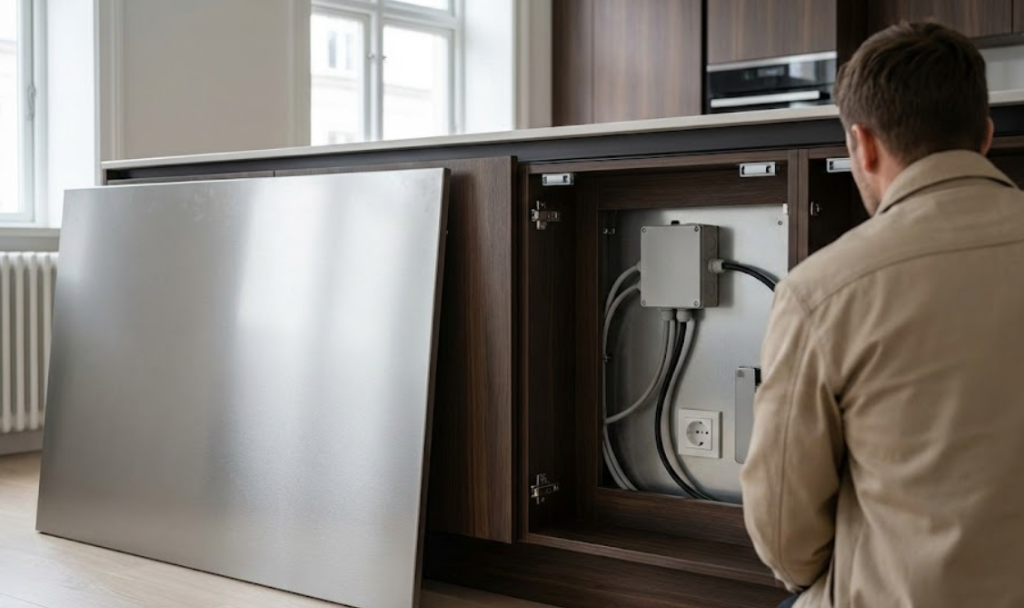
## The real trade-off: less site friction, more design/factory discipline
Simpler installation demands:
-
- coherent tolerances
-
- tighter quality-in-origin
-
- consistent product data
-
- compatibility across variants
-
- stronger change governance (because “a millimeter” stops being trivial).
DfD doesn’t forgive chaos. If your system relies on “fix it at the end,” this approach will expose you.
That’s why it’s not an installation project. It’s a system project.
## Where it genuinely creates advantage
I see it most valuable when three conditions meet:
### 1) High commercial variability, but repeatable modules
If everything is unique down to the last joint, repeatability collapses. If modularity is real, DfD shines.
### 2) High incident cost
If a second visit destroys schedule, reputation, or cash collection, reducing rework is pure margin.
### 3) Premium positioning based on experience
In premium, the buyer purchases calm. Less noise, less dust, less time at home: that is product.
## The silent risk: innovation turning into dependency
A non-obvious risk: a join system becoming a single point of failure.
-
- Supplier/standard dependency.
-
- Service parts and compatibility issues.
-
- Design changes breaking installed base.
-
- “Looks easy” behavior leading to finish damage.
Innovation without governance can create a new COPQ—more sophisticated and more expensive.
## Signals you’re ready (or not)
I suspect you’re ready when:
-
- installation is saturated by repeated micro-incidents
-
- final collection is delayed by touch-ups and access issues
-
- factory vs site tension is chronic
-
- after-sales acts as a bridge because the product isn’t service-friendly
-
- the team understands standardization protects premium.
I suspect you’re not ready when:
-
- product changes are uncontrolled
-
- product data is “opinion,”
-
- quality is corrected at the end
-
- site changes are managed informally.
DfD won’t fix that. It will amplify it.
## Real circularity without bureaucracy
Circularity in premium often stays as a story because disassembly is destructive and expensive.
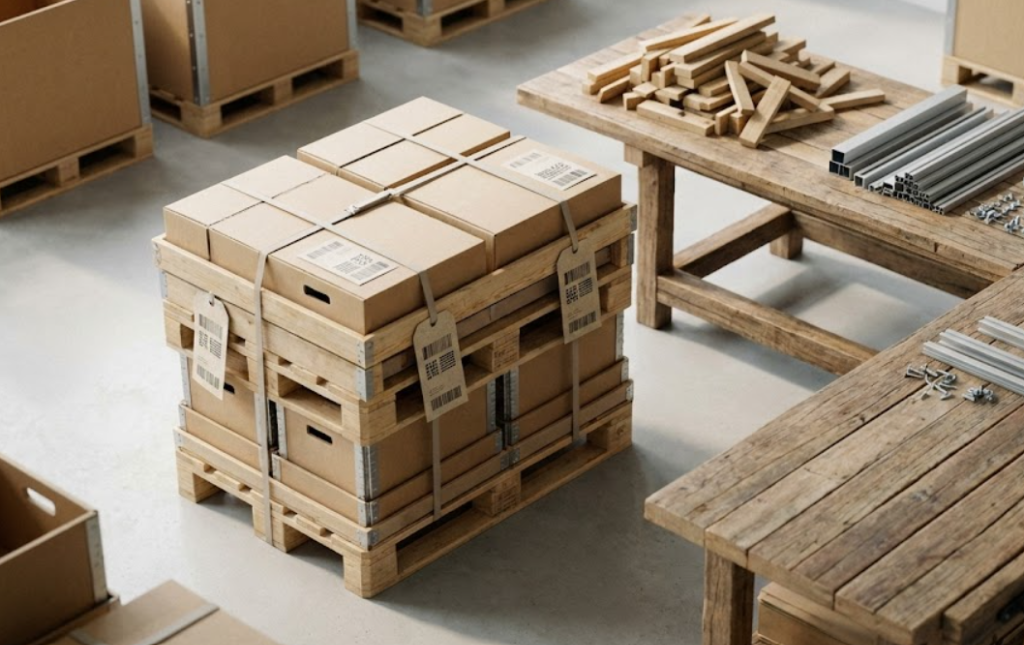
DfD changes the mental (and operational) cost of:
-
- disassembling without damage
-
- replacing a component without rebuilding half the kitchen
-
- sorting materials without artisanal effort
-
- enabling refurbishment where it makes sense.
This doesn’t mean you must launch a circular program tomorrow. It means: if regulation or market pressure hits, you don’t start from zero.
Competitive advantage is not the certificate. It’s being ready without trauma.
## The diagnostic questions I ask first
I don’t ask “do you like the idea?” I ask:
-
- Which part of margin is decided in installation, not in the factory?
-
- How many incidents are pattern repetition (not random cases)?
-
- Is your product designed to be serviced—or sealed?
-
- What is the true cost of rescheduling, even if nobody books it?
-
- Do your variants share interfaces, or does each invent its own world?
-
- Who governs compatibility across changes and components?
-
- If a module must be removed at the customer site, can it be done without damage?
If answers are fuzzy, innovation becomes risk.
## What I don’t recommend
-
- adopting a join system as a shortcut to “install faster” without product order
-
- selling it as a marketing argument before the experience is proven
-
- letting assembly vary by installer “because it’s easy,”
-
- changing components without protecting compatibility for service
-
- confusing circularity with paperwork.
## The board I want (conceptual)
Visibility into:
-
- installation incidents by a few meaningful families
-
- root causes by interface (design–factory–logistics–site)
-
- perceived friction cost (schedule, cash, reputation)
-
- compatibility across variants (“sacred interfaces”)
-
- service signals (accessibility, disassembly, finishes).
When that board exists, DfD stops being “innovation.” It becomes system.
## Closing
Tool-less assembly isn’t a trick. It’s an architectural decision: move friction from the site to design/factory discipline to protect margin, experience, and service.